
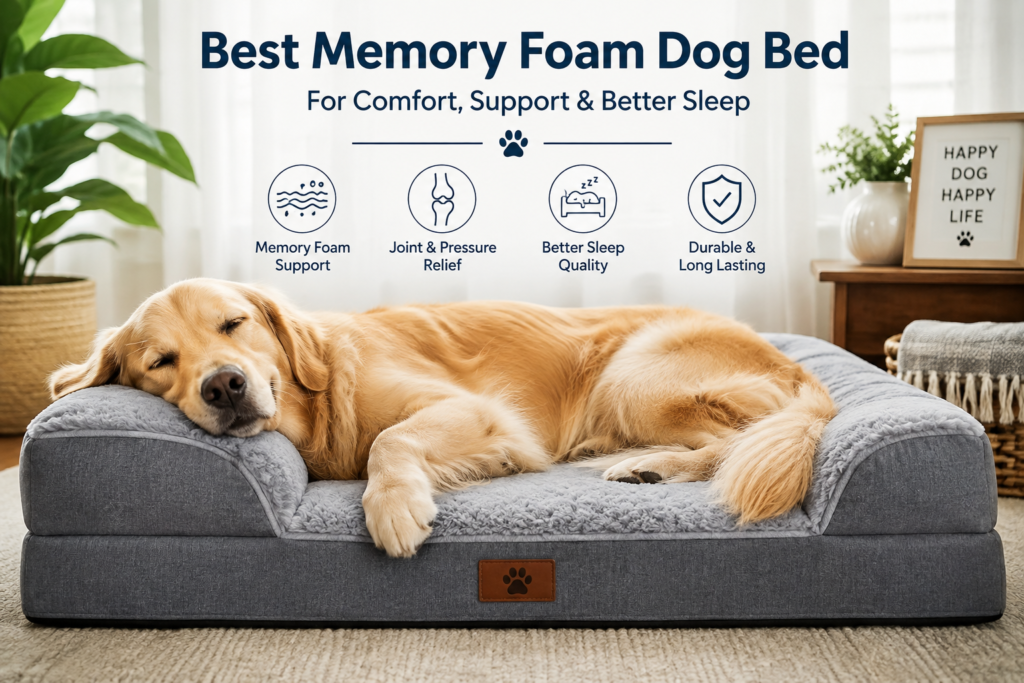
Best Memory Foam Dog Beds: Comfort, Support & Buying Guide
Finding the right dog bed can make a bigger difference than many pet owners realize. Dogs spend a significant portion of their day resting, and the quality of that rest affects their energy levels, mobility, and overall well-being.
That’s why many pet owners are turning to the best memory foam dog beds. Unlike standard polyester-filled beds that flatten over time, memory foam conforms to a dog’s body, helping distribute weight evenly and reduce pressure on joints.
Whether you have a growing puppy, an active adult dog, or a senior companion dealing with stiffness, choosing the right memory foam dog bed can improve comfort and provide long-term support.
In this guide, we’ll explore what makes memory foam beds different, who benefits most from them, key features to consider, and how to choose the best option for your furry friend.
Why This Topic Matters
Dogs rely on quality sleep for recovery, muscle repair, and healthy aging. Poor sleeping surfaces can contribute to discomfort, especially in larger breeds and older dogs.
A well-designed orthopedic memory foam dog bed helps:
- Support joints and hips
- Reduce pressure points
- Improve sleep quality
- Assist dogs with arthritis
- Maintain body alignment
- Increase overall comfort
As veterinary care improves and dogs live longer, more owners are looking for products that support mobility and comfort throughout every life stage.
What Is a Memory Foam Dog Bed?
A memory foam dog bed uses high-density foam that responds to body heat and weight. Instead of creating pressure points, the foam molds to the dog’s shape and returns to its original form after use.
This technology was originally developed for pressure relief and is now widely used in both human and pet bedding.
Key Characteristics
- Contours to the dog’s body
- Supports joints and spine
- Maintains shape longer than fiber-filled beds
- Suitable for dogs of all ages
- Available in multiple thicknesses and styles
Benefits of the Best Memory Foam Dog Beds
Superior Joint Support
One of the biggest advantages is pressure relief. Memory foam distributes body weight more evenly than traditional stuffing.
This can be especially beneficial for:
- Senior dogs
- Large breeds
- Dogs recovering from surgery
- Dogs with arthritis
Better Sleep Quality
Comfortable dogs tend to sleep more soundly.
When a dog isn’t constantly adjusting position due to discomfort, they often enjoy deeper and more restorative rest.
Long-Term Durability
A durable memory foam dog bed usually maintains its shape longer than standard beds.
Quality foam resists sagging, making it a cost-effective investment over time.
Temperature Regulation
Many modern options include cooling layers, creating a cooling memory foam dog bed that helps prevent overheating during warmer months.
Improved Mobility
Reduced pressure on joints may help dogs stand up, lie down, and move around more comfortably after resting.
Memory Foam vs Orthopedic Dog Beds
Many shoppers use these terms interchangeably, but they are not always identical.
| Feature | Memory Foam Dog Bed | Standard Orthopedic Bed | Best Choice |
| Pressure Relief | Excellent | Good | Memory Foam |
| Joint Support | Excellent | Good to Excellent | Memory Foam |
| Durability | High | Moderate to High | Memory Foam |
| Comfort | Excellent | Good | Memory Foam |
| Cost | Moderate to High | Moderate | Depends on Budget |
| Senior Dogs | Excellent | Good | Memory Foam |
In many cases, the best orthopedic dog beds use memory foam as their primary support material.
Best Memory Foam Dog Bed for Senior Dogs
Older dogs often experience:
- Arthritis
- Hip discomfort
- Reduced mobility
- Joint stiffness
A senior dog memory foam bed can provide a more supportive resting surface compared to traditional beds.
Look For:
- Thick foam base
- Non-slip bottom
- Easy-access low profile design
- Washable cover
- Waterproof liner
Senior dogs typically benefit from at least 4 inches of high-density foam.
Best Memory Foam Dog Bed for Large Breeds
Large breeds place greater pressure on bedding surfaces.
Examples include:
- Labrador Retrievers
- German Shepherds
- Golden Retrievers
- Great Danes
- Rottweilers
A memory foam dog bed for large dogs should include:
- High-density foam
- Extra-thick support layer
- Reinforced stitching
- Durable cover materials
Thin beds often flatten quickly under larger dogs.
Recommended Thickness
| Dog Weight | Foam Thickness |
| Up to 30 lbs | 2–3 inches |
| 30–60 lbs | 3–4 inches |
| 60–90 lbs | 4–5 inches |
| 90+ lbs | 5–7 inches |
Memory Foam Dog Bed for Dogs with Arthritis
Dogs with arthritis often struggle with inflammation and joint pain.
A quality memory foam dog bed for arthritis helps by:
- Reducing pressure on painful joints
- Supporting natural body alignment
- Providing cushioning without sinking excessively
Many veterinarians recommend supportive sleep surfaces as part of an overall arthritis management plan.
Best Washable Memory Foam Dog Beds
Dogs bring dirt, hair, moisture, and odors into their sleeping area.
A washable memory foam dog bed simplifies maintenance.
Ideal Features
- Removable zippered cover
- Machine-washable fabric
- Waterproof foam protector
- Stain-resistant materials
Regular cleaning helps maintain hygiene and extend the bed’s lifespan.
Best Cooling Memory Foam Dog Beds
Some dogs naturally sleep hot.
Breeds with thick coats may particularly benefit from a cooling memory foam dog bed.
Cooling designs often use:
- Gel-infused foam
- Breathable mesh panels
- Moisture-wicking covers
- Airflow channels
These features help improve comfort during warmer seasons.
Who Should Buy a Memory Foam Dog Bed?
A memory foam bed isn’t only for older dogs.
Great Choice For:
✅ Senior dogs
✅ Large breed dogs
✅ Dogs with joint issues
✅ Active sporting dogs
✅ Dogs recovering from injuries
✅ Dogs that spend many hours sleeping
May Not Be Necessary For:
- Very young puppies
- Dogs that frequently chew bedding
- Temporary bedding situations
Buying Guide: How to Choose a Memory Foam Dog Bed
1. Foam Quality
Not all foam is created equal.
Look for:
- High-density foam
- Medical-grade foam
- CertiPUR-certified foam when available
Higher-density foam generally lasts longer.
2. Size
Measure your dog from nose to tail while lying down.
Add 6–12 inches for comfortable stretching space.
3. Cover Material
Popular choices include:
- Microsuede
- Canvas
- Plush fleece
- Polyester blends
Durable fabrics help resist wear and tear.
4. Waterproof Protection
A waterproof memory foam dog bed protects the foam from:
- Accidents
- Drool
- Spills
- Moisture damage
5. Ease of Cleaning
Choose removable covers whenever possible.
This saves time and helps maintain freshness.
6. Non-Slip Base
Hardwood and tile floors can cause beds to slide.
Rubberized bottoms improve stability.
7. Warranty Coverage
Premium beds often include warranties ranging from one to five years.
A warranty can indicate manufacturer confidence in product quality.
Budget Considerations
Budget Range ($30–$60)
Typically suitable for:
- Small dogs
- Occasional use
- Basic support needs
Mid-Range ($60–$120)
Usually offers:
- Better foam density
- Washable covers
- Improved durability
Premium Range ($120+)
Often includes:
- Multi-layer foam construction
- Waterproof protection
- Enhanced durability
- Extended warranties
Expert Tips for Choosing the Right Bed
Match the Bed to Sleeping Style
Dogs that curl up may prefer bolstered edges.
Dogs that stretch out often prefer flat mattress-style beds.
Consider Future Needs
If your dog is approaching senior years, investing in better support now may be beneficial later.
Check Foam Thickness
A thick bed with low-density foam may perform worse than a thinner bed with high-density foam.
Rotate the Bed
Occasional rotation can help distribute wear evenly.
Common Mistakes Dog Owners Make
Buying Based Only on Price
The cheapest bed often becomes expensive if it needs replacement quickly.
Choosing the Wrong Size
Many owners underestimate how much space their dog needs.
Ignoring Washability
A difficult-to-clean bed may become unhygienic over time.
Overlooking Foam Quality
Not all memory foam provides equal support.
Forgetting Waterproof Protection
Moisture damage can significantly shorten a bed’s lifespan.
Are Memory Foam Dog Beds Worth It?
For many dog owners, the answer is yes.
A quality dog bed with memory foam often lasts longer and provides better support than conventional alternatives.
Benefits may include:
- Better sleep
- Greater comfort
- Reduced pressure points
- Improved support for aging dogs
The value becomes even clearer for large breeds and dogs experiencing mobility challenges.
Frequently Asked Questions
1. What is the best memory foam dog bed for senior dogs?
Look for high-density foam, a washable cover, waterproof protection, and easy access for dogs with mobility issues.
2. How thick should a memory foam dog bed be?
Most dogs benefit from 3–5 inches of foam, while large breeds may need 5–7 inches.
3. Are memory foam dog beds good for arthritis?
Yes. Memory foam helps reduce pressure on joints and can improve comfort for dogs with arthritis.
4. Do memory foam dog beds flatten over time?
High-quality foam resists flattening significantly better than traditional fiber-filled beds.
5. Can puppies use memory foam dog beds?
Yes, although the greatest benefits are usually seen in adult and senior dogs.
6. How often should I wash the bed cover?
Most owners wash covers every two to four weeks, depending on use.
7. What is the difference between memory foam and orthopedic foam?
Memory foam contours closely to the body, while orthopedic foam focuses on support and pressure relief. Many orthopedic beds use memory foam.
8. Are waterproof memory foam dog beds worth it?
Yes. Waterproof protection can significantly extend the life of the foam core.
9. What size memory foam bed should I buy?
Measure your dog while lying down and add 6–12 inches for comfortable movement.
10. Can large breed dogs use standard memory foam beds?
Large breeds should use beds specifically designed for higher weight capacity and thicker foam support.
Final Verdict
The best memory foam dog beds offer more than just a soft place to sleep. They provide meaningful support for joints, muscles, and overall comfort.
Whether you’re shopping for a growing dog, a large breed companion, or an aging pet dealing with stiffness, a well-made orthopedic memory foam dog bed can improve sleep quality and help support long-term mobility.
When choosing a bed, focus on foam quality, durability, washability, waterproof protection, and proper sizing. These factors often matter more than brand names or marketing claims.
A carefully selected memory foam bed can become one of the most valuable comfort upgrades you provide for your dog.
Explore More Pet Comfort Solutions at Al Falah Trader
Looking for more ways to keep your dog comfortable and happy?
Explore Al Falah Trader’s collection of pet essentials, including supportive dog beds, comfort accessories, feeding solutions, and everyday products designed to help pets live healthier and more comfortable lives.
Read More Pet Care Tips from Al Falah Trader
If you found this guide helpful, you might also enjoy these Blogs/articles:
Best Dog Beds for Senior Dogs: Comfort, Support and Buying Guide (2026)
Best Orthopedic Dog Beds for Comfort and Joint Support
Best Cooling Dog Beds for Summer: Stay Cool & Comfortable
Best Dog Beds for Anxiety: Comfort That Helps Dogs Feel Safe (2026)
Best Heated Dog Beds for Winter: Keep Your Dog Warm & Comfortable
Recommended Products
Memory Foam Dog Beds for Maximum Comfort & Support – Shop Now
Best Heated Dog Beds for Winter – Shop Now
Authoritative External Resources
For readers who want to learn more about canine health and behavior, consider linking to: