

How Much Sleep Do Dogs Need? (how much do dogs sleep)
If you’ve ever looked over at your dog in the middle of the day and wondered, “Are they sleeping again?”, you’re not alone. Many dog owners are surprised by how much time their pets spend resting.
Unlike humans, dogs follow different sleep patterns and often sleep in multiple short periods throughout the day. While it may seem excessive, sleeping is a vital part of your dog’s physical recovery, mental development, and overall health.
So, how much sleep do dogs need? The answer depends on several factors, including age, breed, activity level, and health condition. Puppies may sleep nearly all day, while active adult dogs often require less rest.
In this guide, we’ll break down dog sleep requirements, explain what’s normal, discuss warning signs of excessive sleep, and share practical ways to help your dog get better rest.
Why This Topic Matters
Sleep affects nearly every aspect of a dog’s life.
Quality rest helps support:
- Brain development
- Immune system function
- Muscle recovery
- Emotional well-being
- Healthy behavior
- Energy levels
Poor sleep may contribute to irritability, anxiety, lower activity levels, and changes in appetite. Understanding your dog’s sleeping habits can help you identify health concerns before they become serious.
How Many Hours Do Dogs Sleep Per Day? (how many hours a day do dogs sleep)
One of the most common questions pet owners ask is: How many hours do dogs sleep?
The average healthy dog sleeps between 12 and 14 hours per day.
However, this number can vary significantly.
| Dog Type | Average Sleep Per Day |
| Puppies | 18–20 hours |
| Adult Dogs | 12–14 hours |
| Senior Dogs | 14–18 hours |
| Working Dogs | 10–12 hours |
| Large Breeds | 14–18 hours |
These ranges represent normal dog sleeping hours for most healthy pets.
Dogs are polyphasic sleepers, meaning they sleep multiple times throughout the day rather than in one long block like most humans.
Understanding Dog Sleep Patterns (how much sleep do dogs need)
The Canine Sleep Cycle
Dogs experience several stages of sleep, including:
- Light Sleep
- Deep Sleep
- REM Sleep in Dogs
During REM sleep, dogs may:
- Twitch
- Move their paws
- Bark softly
- Whimper
- Move their eyes
This stage is believed to be associated with dreaming and memory processing.
Interestingly, dogs spend less time in deep sleep than humans, which is one reason they often need more total hours of rest.
How Much Sleep Does a Puppy Need?
Puppies are essentially growing machines.
Between physical growth, learning commands, socialization, and exploration, their bodies and brains require enormous amounts of recovery.
Typical Puppy Sleep Schedule
| Puppy Age | Sleep Per Day |
| 8–12 Weeks | 18–20 Hours |
| 3–6 Months | 16–18 Hours |
| 6–12 Months | 14–16 Hours |
Why Do Puppies Sleep So Much?
Puppies sleep because:
- Their brains are developing rapidly
- Muscles and bones are growing
- New experiences require processing
- Their immune systems are maturing
A healthy puppy sleep schedule includes frequent naps throughout the day.
How Much Sleep Does an Adult Dog Need?
Most healthy adult dogs require around 12 to 14 hours of sleep daily.
However, several factors influence dog sleep requirements.
Activity Level
A highly active dog may need more recovery time than a less active dog.
Examples include:
- Hiking companions
- Sporting breeds
- Agility competitors
- Farm dogs
Breed Differences
Some breeds naturally sleep more than others.
Breeds known for longer sleep durations include:
- Mastiffs
- Saint Bernards
- Great Danes
- New found lands
Meanwhile, highly energetic breeds often remain awake longer.
Examples include:
- Border Collies
- Australian Shepherds
- Belgian Malinois
How Much Sleep Does a Senior Dog Need?
As dogs age, their sleep needs often increase.
Most senior dogs sleep between 14 and 18 hours per day.
Senior Dog Sleep Patterns Change Because Of:
- Reduced energy levels
- Joint discomfort
- Slower metabolism
- Health conditions
- Reduced activity
More sleep is usually normal for aging dogs. However, sudden changes should always be discussed with a veterinarian.
How Much Sleep Do Large Breed Dogs Need?
Large and giant breeds often require more rest than smaller dogs.
Examples
- Great Dane
- Mastiff
- Bernese Mountain Dog
- Newfoundland
These breeds may sleep 14–18 hours daily due to their body size and energy demands.
How Much Sleep Do Small Dogs Need?
Small breeds generally require slightly less sleep than giant breeds.
Examples include:
- Chihuahua
- Miniature Pinscher
- Yorkshire Terrier
- Toy Poodle
Most healthy small dogs average 11–14 hours daily, depending on age and activity.
Why Do Dogs Sleep So Much?
Many owners wonder:
Why does my dog sleep all day?
In many cases, it’s perfectly normal.
Dogs often sleep because:
- They are conserving energy
- Their breed naturally rests more
- They had an active day
- They are aging
- They are recovering from exercise
Dogs do not experience daily routines exactly like humans. If there is little stimulation available, many dogs choose to nap.
Factors That Affect a Dog’s Sleep
Several factors influence healthy sleep for dogs.
Age
Puppies and seniors typically sleep more than adults.
Breed
Some breeds are naturally more active than others.
Exercise
Active dogs often sleep better and more deeply.
Diet
Poor nutrition may affect dog wellness and recovery.
Environment
Dogs sleep best in:
- Quiet areas
- Comfortable temperatures
- Supportive beds
- Low-stress environments
Health Conditions
Pain, illness, anxiety, and hormonal issues may affect dog sleeping behavior.
Signs Your Dog May Be Sleeping Too Much
While sleep is healthy, excessive sleeping may sometimes indicate a problem.
Watch for:
- Sudden increase in sleeping hours
- Lack of interest in activities
- Loss of appetite
- Weight changes
- Difficulty waking up
- Weakness
- Behavioral changes
Is My Dog Sleeping Too Much?
Ask yourself:
- Has their sleep pattern changed suddenly?
- Are they less active than normal?
- Are other symptoms present?
If the answer is yes, a veterinary evaluation may be worthwhile.
When Should You Contact a Veterinarian?
Contact your veterinarian if your dog experiences:
- Sudden lethargy
- Significant changes in sleeping habits
- Persistent fatigue
- Breathing difficulties during sleep
- Refusal to eat
- Signs of pain
Changes in dog health and sleep often occur together.
Early attention may help identify underlying conditions before they worsen.
Benefits of Healthy Sleep for Dogs
Proper rest provides many benefits.
Physical Benefits
- Better muscle recovery
- Improved immune function
- Healthier joints
- Increased energy
Mental Benefits
- Better memory retention
- Improved learning ability
- Reduced stress
- Improved mood
Behavioral Benefits
- Better focus
- Reduced anxiety
- Fewer destructive behaviors
Drawbacks and Things to Consider
While sleep itself is beneficial, excessive sleep may hide underlying issues.
Potential concerns include:
- Obesity
- Depression
- Chronic pain
- Arthritis
- Thyroid disorders
- Diabetes
- Heart disease
Monitoring your dog’s sleeping habits helps identify problems early.
Dog Bed Buying Guide for Better Sleep
A quality bed can significantly improve your dog’s sleep quality.
Who Should Buy a Premium Dog Bed?
- Puppies
- Senior dogs
- Dogs with arthritis
- Large breeds
- Dogs recovering from injury
Key Features to Consider
Support
Look for orthopedic foam or memory foam.
Size
Your dog should be able to stretch comfortably.
Durability
Choose strong materials that resist wear.
Washability
Removable covers simplify cleaning.
Temperature Control
Cooling fabrics may help dogs in warmer climates.
Budget Considerations
| Budget | What to Expect |
| Under $40 | Basic cushioning |
| $40–$80 | Better comfort and durability |
| $80–$150+ | Orthopedic and premium support |
Materials
Popular options include:
- Memory foam
- Plush fabric
- Polyester filling
- Waterproof liners
Maintenance
Choose beds with:
- Machine-washable covers
- Stain-resistant materials
- Replaceable inserts
Warranty
Premium brands may offer warranties ranging from one to several years.
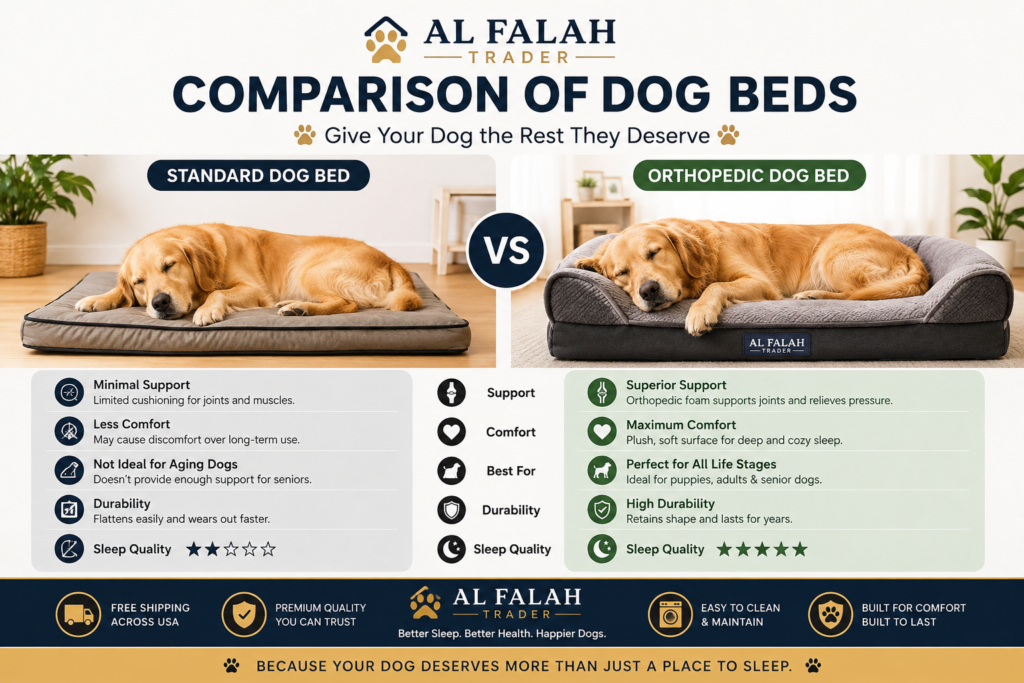
Comparison Table: Choosing the Right Sleeping Surface
| Feature | Standard Bed | Orthopedic Bed | Best Choice |
| Comfort | Moderate | Excellent | Orthopedic Bed |
| Joint Support | Low | High | Orthopedic Bed |
| Durability | Moderate | High | Orthopedic Bed |
| Senior Dogs | Fair | Excellent | Orthopedic Bed |
| Recovery Support | Limited | Excellent | Orthopedic Bed |
Expert Tips for Better Dog Sleep
- Maintain a consistent daily routine.
- Provide regular exercise.
- Offer a comfortable sleeping area.
- Keep noise levels low at night.
- Avoid overstimulation before bedtime.
- Ensure access to fresh water.
- Use an orthopedic bed for senior dogs.
- Schedule regular veterinary checkups.
Common Mistakes Dog Owners Make
Assuming More Sleep Always Means Better Health
Excessive sleep can sometimes signal illness.
Ignoring Breed Differences
Every breed has unique dog rest requirements.
Skipping Daily Exercise
Lack of activity may affect dog energy levels and sleep quality.
Using an Improper Bed
An unsupportive sleeping surface may reduce comfort.
Overlooking Environmental Stress
Noise, temperature, and anxiety can disrupt the canine sleep cycle.
Frequently Asked Questions About Dog Sleep
1. How much sleep does a healthy dog need?
Most healthy adult dogs need approximately 12–14 hours of sleep per day.
2. Do dogs sleep more than humans?
Yes. Most dogs sleep significantly more than the average adult human.
3. How many hours should a dog sleep at night?
Most dogs sleep between 6 and 9 hours overnight and complete the rest through daytime naps.
4. Why do puppies sleep so much?
Rapid growth and brain development require substantial recovery time.
5. Can dogs sleep too much?
Yes. Excessive sleep combined with other symptoms may indicate a health issue.
6. Do older dogs need more sleep?
Yes. Senior dogs often require additional rest because of aging and reduced activity.
7. What affects a dog’s sleep?
Age, breed, exercise, health, diet, and environment all influence sleep quality.
8. How can I improve my dog’s sleep?
Provide exercise, a comfortable bed, consistent routines, and a quiet sleeping area.
9. Why is my dog suddenly sleeping more?
Illness, pain, aging, stress, or changes in routine may contribute to increased sleep.
10. What are normal dog sleeping hours?
Most adult dogs sleep 12–14 hours daily, while puppies and seniors often sleep longer.
Final Verdict
So, how much sleep do dogs need? For most adult dogs, 12 to 14 hours daily is completely normal. Puppies may sleep up to 20 hours, while senior and large-breed dogs often require even more rest.
Understanding your dog’s sleep patterns helps you recognize what’s normal and identify potential health concerns early. Paying attention to sleep quality, activity levels, and behavioral changes can contribute significantly to your pet’s long-term wellness.
Remember, good sleep is not a luxury for dogs—it’s a necessity for healthy growth, recovery, learning, and happiness.
Explore Comfortable Dog Beds at Al Falah Trader
Want to help your dog enjoy deeper, healthier sleep?
Explore Al Falah Trader’s collection of:
- Orthopedic dog beds
- Memory foam pet beds
- Washable dog beds
- Plush calming beds
- Large-breed dog beds
A comfortable sleeping space can make a noticeable difference in your dog’s daily comfort, recovery, and overall well-being.
Read More Pet Care Tips/Articles from Al Falah Trader
If you found this guide helpful, you might also enjoy these Blogs/articles:
Dog Care Tips for First-Time Owners: Complete Beginner Guide
Daily Dog Care Checklist: Essential Tasks for a Healthy Dog
Best Dog Beds for Senior Dogs: Comfort, Support and Buying Guide (2026)
Best Orthopedic Dog Beds for Comfort and Joint Support
Best Dog Beds for Anxiety: Comfort That Helps Dogs Feel Safe (2026)
Best Memory Foam Dog Beds: Comfort, Support & Buying Guide
Recommended Products
Memory Foam Dog Beds for Maximum Comfort & Support – Shop Now
Best Heated Dog Beds for Winter – Shop Now
Plush Calming Dog Bed – Soft Pet Nest Bed for Dogs & Cats – Shop Now
Princess Dog Bed – Cozy Fantasy Pet Nest Bed for Dogs & Cats – Shop Now
Dog Potty Training in 7 Days – E-books
Authoritative External Resources
For readers who want to learn more about canine health and behavior, consider linking to: