
A puppy vaccination schedule typically begins at 6–8 weeks of age and continues with repeat core vaccines every 2–4 weeks until the puppy reaches the appropriate age for completion. Rabies vaccination follows state and local requirements, while additional vaccines may be recommended based on your puppy’s lifestyle and exposure risks. Use this complete first-year puppy vaccination checklist to stay organized, track important vet visits, and discuss the right vaccination plan with your veterinarian.
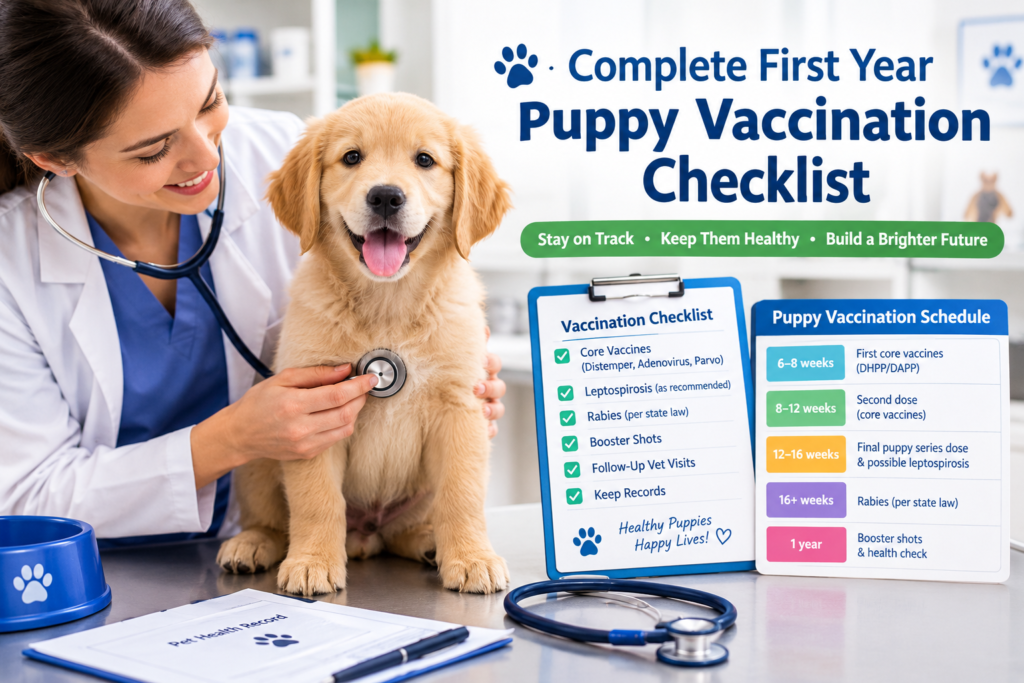
Complete First-Year Puppy Vaccination Checklist
Bringing home a puppy is exciting, but the first year also comes with an important health responsibility: keeping vaccinations on schedule. A young puppy’s immune system is still developing, and maternal antibodies can interfere with vaccination, which is one reason puppies receive a series of vaccines rather than a single shot.
This complete first year puppy vaccination checklist gives U.S. puppy owners a practical framework for understanding when vaccines are commonly given, which diseases they help prevent, when boosters may be needed, and what questions to ask the veterinarian.
The exact schedule is not identical for every puppy. Your veterinarian may adjust it based on your puppy’s age, previous vaccination records, health, lifestyle, geographic location, exposure risk, and the specific vaccine product being used. Rabies vaccination is also affected by state and local requirements.
Important: This article is educational information, not a substitute for veterinary care. Your veterinarian should create and confirm your puppy’s individual vaccination plan.
Why This Topic Matters
Vaccination is one part of preventive veterinary care that can help protect puppies from serious infectious diseases. The American Animal Hospital Association (AAHA) recommends core vaccination against diseases including distemper, adenovirus, parvovirus, leptospirosis, and rabies, while other vaccines may be appropriate depending on a dog’s lifestyle and risk factors.
A puppy may appear perfectly healthy while still being vulnerable to infection. That’s why completing the entire initial vaccine series is more important than simply receiving the first appointment.
There is also a practical reason to maintain good records. Your puppy’s vaccination documentation may be needed for boarding, daycare, training classes, travel, grooming facilities, housing requirements, or other situations.
Complete First Year Puppy Vaccination Checklist
Use this as a puppy vaccination checklist to organize your veterinary visits. It is a general framework, not a fixed prescription.
| Puppy Age | Common Vaccination Milestone | What to Discuss With Your Vet |
| 6–8 weeks | First core combination vaccine may begin | Distemper, adenovirus, parvovirus and related combination vaccines |
| 8–12 weeks | Follow-up dose | Continue the puppy vaccine series |
| 10–14 weeks | Additional dose may be needed | Review exposure risks and lifestyle vaccines |
| 12+ weeks | Leptospirosis may begin when appropriate | Discuss whether your puppy’s risk warrants it |
| Around 12–16+ weeks | Rabies may be due depending on law/product | Check your state’s requirements |
| 14–16+ weeks | Final puppy-series dose may be given | Confirm completion with your veterinarian |
| Within 1 year after initial series | Booster | Review core vaccines and overall health |
| Throughout Year 1 | Lifestyle-dependent vaccines | Bordetella, Lyme, canine influenza, etc., if appropriate |
AAHA’s general guidance recommends at least three doses of a distemper/adenovirus/parvovirus combination vaccine between 6 and 16 weeks, given 2–4 weeks apart. Vaccination may continue beyond 16 weeks depending on the puppy’s circumstances and risk.
Why Are Puppy Vaccines Given More Than Once?
One reason is maternal antibody interference. Puppies receive temporary antibodies from their mother, but those antibodies gradually decline. While helpful early in life, they can sometimes interfere with a vaccine’s ability to stimulate the puppy’s own immune response.
Consequently, veterinarians use repeated vaccinations during puppyhood to increase the likelihood that the puppy develops adequate protection as maternal antibodies decrease.
Puppy Vaccination Schedule by Age
A typical puppy vaccination schedule starts around 6–8 weeks of age for the core puppy combination series.
However, don’t treat a calendar found online as an exact prescription for your puppy. The AAHA guidelines emphasize individualized vaccination decisions based on factors such as lifestyle and disease exposure risk.
6–8 Weeks: First Puppy Vaccinations
This is commonly when the initial core vaccination series begins.
Depending on the product and veterinary protocol, the combination vaccine can protect against diseases such as:
- Canine distemper
- Canine adenovirus
- Canine parvovirus
- Sometimes parainfluenza
The exact combination depends on the vaccine product.
At this appointment, ask your veterinarian to review:
- Previous breeder or shelter vaccination records
- Deworming history
- Your puppy’s current health
- Future vaccination dates
- Parasite prevention
- Socialization and exposure precautions
8–12 Weeks: Continue the Series
The next vaccination appointment helps continue the primary series.
AAHA generally recommends repeating the core combination vaccine at intervals of approximately 2–4 weeks during puppyhood.
This is also a good time to discuss your puppy’s lifestyle. For example, a puppy that will regularly visit boarding facilities, dog daycare, hiking areas, or other environments with many dogs may have different vaccine considerations from a puppy that spends most of its time at home.
12–16 Weeks: Build Protection
Additional core vaccinations may be necessary during this period.
Parvovirus and distemper are particularly important considerations because maternal antibodies can interfere with vaccination during early puppyhood. AAHA notes that revaccination is generally continued until puppies are older than 16 weeks, with 18–20 weeks potentially preferred in areas with higher disease risk.
Your veterinarian may also discuss leptospirosis, depending on your puppy’s circumstances.
Around 16 Weeks and Beyond
The veterinarian should determine when the puppy’s initial series is complete.
Don’t assume that receiving a vaccine at exactly 16 weeks means every puppy has finished the same schedule. Vaccine products, medical history, exposure risk, and veterinary recommendations can differ.
Puppy Vaccination Chart: Core vs. Lifestyle Vaccines
One of the easiest ways to understand a puppy vaccination chart is to separate vaccines into core and risk-based categories.
Core Vaccines
AAHA’s current guidance identifies vaccines against the following as core recommendations:
- Distemper
- Adenovirus
- Parvovirus
- Leptospira
- Rabies
Parainfluenza may also be included in combination products.
Lifestyle and Risk-Based Vaccines
Depending on where you live and how your puppy spends time, your veterinarian may discuss:
- Bordetella
- Lyme disease
- Canine influenza
- Other risk-based protection
For example, a dog that frequently visits boarding facilities may have different exposure considerations from one that rarely encounters unfamiliar dogs.
AAHA specifically recommends considering lifestyle, geographic location, and exposure risk when deciding which additional vaccines are appropriate.
Understanding the Puppy Shots Schedule
People often search for a puppy shots schedule expecting one universal calendar. In reality, there is a standard framework, but the final plan should be personalized.
A puppy may receive a combination vaccine commonly referred to by names such as DHPP or DAPP, depending on the vaccine formulation and terminology used by the veterinary practice.
Rather than focusing only on the abbreviation, ask your veterinarian:
- Which diseases does this vaccine protect against?
- Is it a core vaccine for my puppy?
- When is the next dose due?
- Does my puppy need any lifestyle-based vaccines?
- When is the first booster after the puppy series?
- When can my puppy safely increase contact with other dogs?
Keeping these answers in one place makes the first year much easier to manage.
Rabies Vaccine for Puppies
Rabies deserves special attention because vaccination requirements are governed by state and local regulations.
The CDC advises that dogs, cats, and ferrets be vaccinated for rabies according to applicable local laws. The timing can vary by state and vaccine product.
In the United States, rabies vaccination is therefore not something to schedule solely from a generic online puppy shots chart.
Before the appointment, check:
- Your state’s rabies requirements
- Your veterinarian’s recommended timing
- The vaccine product’s labeled schedule
- Whether you need documentation or a certificate
The CDC also notes that an animal is considered immunized 28 days after its initial rabies vaccination.
What Are the Benefits of Puppy Vaccination?
Helps Reduce the Risk of Serious Disease
Core vaccines are designed to protect against important infectious diseases, including distemper and parvovirus.
Parvovirus is particularly concerning in young dogs, and completing the puppy series is an important part of preventive care.
Supports Safer Socialization
Vaccination planning isn’t only about avoiding dogs forever. Puppies also need appropriate social experiences during development.
Instead of making assumptions about when your puppy can interact with other dogs, discuss safe socialization options with your veterinarian based on local disease risk and your puppy’s vaccination status.
Helps Meet Legal Requirements
Rabies vaccination requirements can be established by state or local law, making compliance an important part of responsible dog ownership.
Creates a Long-Term Health Record
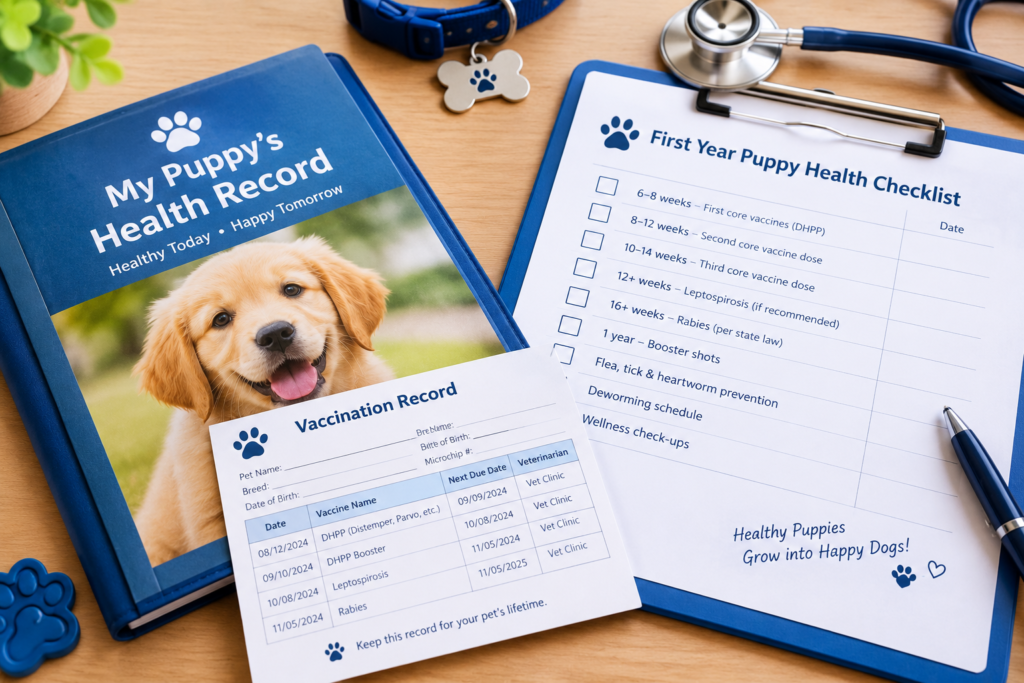
A complete vaccination record gives you a useful reference throughout your dog’s life.
Keep copies of:
- Vaccine name
- Date administered
- Veterinary clinic
- Lot or manufacturer information when provided
- Next recommended vaccination date
- Rabies certificate, when applicable
Drawbacks and Things to Consider
Vaccines are widely used, but no medical intervention is completely free of potential adverse effects.
Most vaccine reactions are mild, but possible reactions can include soreness or swelling at the injection site and other adverse responses. Rare but serious allergic reactions can occur.
After vaccination, monitor your puppy and follow the instructions provided by your veterinarian.
Contact your veterinary clinic promptly if your puppy develops concerning symptoms or if you’re unsure whether a reaction is normal.
Don’t Delay Without Speaking to Your Vet
If you miss a scheduled appointment, don’t automatically restart the entire series or assume your puppy is fully protected.
AAHA recommends consulting appropriate guidance when vaccinations are overdue or vaccination history is uncertain.
Puppy Vaccination Schedule: What to Do Between Appointments
Vaccination is only one part of your puppy’s first-year health plan.
Between appointments:
- Keep vaccination records organized.
- Follow the veterinarian’s parasite-prevention recommendations.
- Avoid unnecessary exposure to sick or unknown-status dogs.
- Ask before visiting high-dog-traffic areas.
- Continue age-appropriate training and socialization.
- Monitor appetite, energy, stool, and general behavior.
- Schedule follow-up appointments before leaving the clinic.
Merck Veterinary Manual recommends regular veterinary visits for puppies every few weeks until around four months of age, while vaccination and other preventive care are being established.
Buying Guide: What Puppy Owners Actually Need
There isn’t a product that can replace veterinary vaccination. However, a few simple organizational and care items can make puppy ownership easier.
Who Should Consider Puppy-Care Products?
These can be particularly useful for:
- First-time puppy owners
- Families with young children
- Owners managing multiple veterinary appointments
- People who want organized health records
- Owners preparing a puppy for training or socialization
Key Features to Look For
If you’re purchasing puppy-care accessories, prioritize:
- Easy-to-clean materials
- Durable construction
- Puppy-safe design
- Simple maintenance
- Appropriate sizing
- Clear instructions
- Reliable manufacturer information
Budget Considerations
Don’t cut essential veterinary care to save money on accessories.
Your priority should be veterinary examinations, recommended vaccinations, parasite prevention, nutrition, identification, and emergency planning. Accessories should support these priorities rather than replace them.
Materials and Durability
Puppies chew, scratch, spill, and make messes. For everyday products, washable and durable materials can be more practical than delicate designs.
Maintenance
Choose products that can be cleaned easily and regularly. This is especially useful for bedding, bowls, toys, and other items that come into contact with food, saliva, urine, or outdoor environments.
Warranty
For higher-priced products, check whether the manufacturer provides a warranty or satisfaction guarantee. For low-cost puppy accessories, durability and ease of cleaning may matter more than warranty length.
Puppy Vaccination vs. Puppy Care Planning
| Feature | Vaccination Plan | General Puppy-Care Plan | Best Choice |
| Disease prevention | Yes | Indirectly | Vaccination plan |
| Veterinary visits | Essential | Essential | Both |
| Vaccination records | Yes | Useful | Vaccination plan |
| Nutrition | Discussed with vet | Daily responsibility | Both |
| Parasite prevention | Often discussed | Ongoing | Both |
| Socialization | Risk-dependent | Important | Both |
| Puppy accessories | Not required | Helpful | Puppy-care plan |
| Legal rabies compliance | Yes | No | Vaccination plan |
The best approach is not choosing one over the other. A healthy puppy needs veterinary preventive care plus responsible day-to-day care.
Expert Tips for Following Your Puppy Immunization Schedule
1. Start With the Records You Already Have
If you adopted from a shelter or purchased your puppy from a breeder, request all available vaccination documentation.
Don’t rely on memory or verbal information when a written record is available.
2. Put Every Appointment on Your Calendar
Puppy vaccinations often involve several appointments. Schedule the next visit before leaving the veterinary clinic.
3. Ask About Local Disease Risk
Your puppy’s environment matters. The vaccine plan for a city-dwelling dog may not be identical to that of a dog that frequently hikes, boards, travels, or spends time outdoors.
4. Don’t Assume “One Shot” Means Fully Protected
Completing the recommended initial series is important. Young puppies may remain vulnerable while their immune response is developing.
5. Keep Rabies Documentation Separate
Keep the rabies certificate somewhere you can quickly find it. You may need it for travel, boarding, licensing, or other situations.
6. Ask About Side Effects Before Leaving
Knowing what your veterinarian considers normal can prevent unnecessary worry later.
7. Recheck the Schedule When Your Lifestyle Changes
If your puppy starts attending daycare, boarding, dog shows, training classes, or frequent outdoor activities, ask whether the vaccination plan should change.
Common Puppy Vaccination Mistakes
Mistake #1: Stopping After the First Vaccine
The first dose is not necessarily the end of the primary series.
Mistake #2: Following a Random Internet Chart
Online schedules are useful for education but cannot account for your puppy’s health, vaccine history, product labeling, and local disease risks.
Mistake #3: Ignoring Rabies Laws
Rabies requirements vary by jurisdiction. Check the rules where you live rather than assuming another state’s schedule applies to you.
Mistake #4: Forgetting Lifestyle Vaccines
Some vaccines may become important because of boarding, daycare, travel, geography, wildlife exposure, or other risks.
Mistake #5: Losing Vaccination Records
Create a physical and digital copy of your puppy’s medical records.
Mistake #6: Assuming Every Puppy Needs the Exact Same Vaccines
Vaccination decisions should consider the individual dog’s lifestyle and exposure risks.
Frequently Asked Questions
1. What is the complete first year puppy vaccination checklist?
A basic checklist includes the initial core vaccine series beginning around 6–8 weeks, follow-up doses every 2–4 weeks as recommended, rabies vaccination according to applicable law, consideration of lifestyle-based vaccines, and a booster within the first year after the initial series. Your veterinarian should determine the exact schedule.
2. When do puppies get their first shots?
Many puppies begin their core vaccination series around 6–8 weeks of age. The series is then repeated at intervals recommended by the veterinarian until the puppy reaches the appropriate age for completion.
3. How many shots does a puppy need?
There isn’t one number that applies to every puppy. The number depends on the puppy’s age, vaccine history, specific products, health status, lifestyle, geographic risk, and legal requirements.
4. What vaccines do puppies need?
Core vaccines commonly include protection against distemper, adenovirus, parvovirus, leptospirosis, and rabies. Additional vaccines such as Bordetella, Lyme disease, and canine influenza may be recommended based on individual risk.
5. Is the puppy vaccination schedule the same in every U.S. state?
Not completely. Rabies vaccination requirements can differ by state and local jurisdiction. Other vaccination decisions can also vary according to local disease risks and your puppy’s lifestyle.
6. When can puppies go outside after vaccinations?
There isn’t a single universal date that is safe for every puppy. Ask your veterinarian about local parvovirus risk and which outdoor environments are appropriate while your puppy is completing its vaccination series.
7. Can puppies meet other dogs before they finish all their shots?
Socialization can be important during puppyhood, but disease exposure must also be considered. Your veterinarian can help you identify lower-risk ways to socialize your puppy while the vaccination series is still underway.
8. What happens if I miss a puppy vaccine appointment?
Contact your veterinarian rather than guessing what to do. The appropriate response depends on which vaccine was missed, how late the puppy is, the previous vaccination history, and the vaccine manufacturer’s instructions.
9. What are common puppy vaccination side effects?
Mild reactions can occur after vaccination, including soreness or an injection-site reaction. More serious allergic reactions are uncommon but possible. Contact your veterinarian if you notice concerning symptoms or are unsure whether a reaction requires attention.
10. Does my puppy need vaccines after the first year?
Yes. Vaccination does not necessarily end after puppyhood. Booster schedules vary by vaccine, and some are administered at longer intervals. Your veterinarian should establish your dog’s ongoing vaccination plan.
Final Verdict
Following a complete first year puppy vaccination checklist is one of the simplest ways to stay organized during an important stage of your dog’s life.
The key is not to memorize one rigid puppy shots chart. Instead, use a general puppy vaccination schedule as a planning tool and work with your veterinarian to create a schedule based on your puppy’s age, medical history, lifestyle, location, and exposure risks.
For most puppies, the core vaccination series begins during the 6–8 week period and continues at appropriate intervals into later puppyhood. Rabies vaccination follows applicable state and local requirements, while additional vaccines may be recommended according to lifestyle and risk.
Most importantly, keep your records, attend every scheduled veterinary visit, and ask questions whenever you’re uncertain. A well-organized first year can establish a strong foundation for your dog’s long-term preventive care.
Explore Puppy Care Products at Al Falah Trader
Vaccinations are the foundation of preventive healthcare, but everyday care matters too. From comfortable sleeping products to practical feeding, grooming, walking, and enrichment accessories, the right supplies can make life easier for both you and your puppy.
Explore Al Falah Trader’s pet collection to find practical products designed to support comfortable, convenient everyday pet care.
Read More Pet Care Tips/Articles from Al Falah Trader
If you found this guide helpful, you might also enjoy these Blogs/articles:
How Often Should You Feed a Puppy? Complete Feeding Guide
Puppy Essentials Checklist: 35 Must-Haves for New Owners
Puppy Feeding Schedule by Age: Complete Guide
Best Orthopedic Dog Beds for Comfort and Joint Support
Best Dog Toys: Safe, Fun, and Durable Picks for Every Dog
Recommended Products
Memory Foam Dog Beds for Maximum Comfort & Support – Shop Now
Best Heated Dog Beds for Winter – Shop Now
Plush Calming Dog Bed – Soft Pet Nest Bed for Dogs & Cats – Shop Now
Princess Dog Bed – Cozy Fantasy Pet Nest Bed for Dogs & Cats – Shop Now
Dog Potty Training in 7 Days – E-books
Durable Cactus Dog Chew Toy – Interactive Toy for Aggressive Chewers & Puppies – Shop Now
Durable Dog Toys For Aggressive Chewers Tough Interactive Dog Toys For Large Dogs Birthday Dog Chew Toy Teething Toys Treat Dispensing Dog Toy – Shop Now
Stainless Steel Cat Water Fountain 7L – Automatic Pet Water Dispenser with Ultra-Quiet Pump – Shop Now
Authoritative External Resources
For readers who want to learn more about canine health and behavior, consider linking to: