
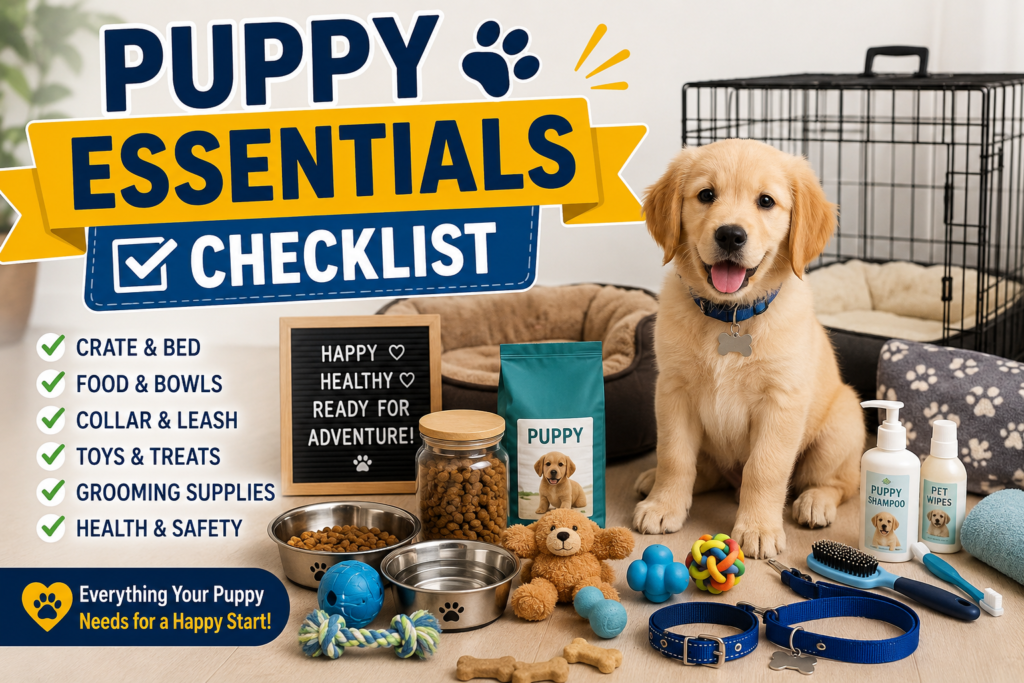
Bringing home a puppy is exciting—but the first few days can also feel surprisingly chaotic. One minute you’re choosing a name, and the next you’re wondering whether you bought the right crate, enough puppy food, training pads, chew toys, or cleaning supplies.
That is why having a Puppy Essentials Checklist before your new companion arrives can make the transition much easier. You don’t need to buy every puppy product you see online. You need the right basics for sleeping, eating, potty training, grooming, transportation, play, and safety.
This guide covers the puppy essentials worth buying before bringing your puppy home, plus the items you can wait on. It is designed for first-time puppy owners in the U.S. and focuses on practical products rather than unnecessary extras.
Important: This checklist covers general puppy-care supplies, not veterinary advice. Your puppy’s veterinarian should guide you on vaccinations, parasite prevention, nutrition, and health concerns.
Why a Puppy Essentials Checklist Matters
Puppies learn about their environment by exploring, chewing, sniffing, and getting into things they probably shouldn’t.
A prepared home gives your puppy a safer space while also making everyday routines easier for you. The American Animal Hospital Association recommends individualized puppy care based on factors such as age, lifestyle, geography, and disease exposure risk.
A good new puppy checklist also prevents last-minute shopping. Instead of discovering that you have no puppy-safe cleaner after an accident on the carpet, you already have what you need.
Most importantly, remember that essentials are different from nice-to-have products. Start with the basics and add items as you learn your puppy’s habits.
Complete Puppy Essentials Checklist
Here’s a practical puppy supplies checklist organized by purpose.
1. Puppy Crate
A properly sized puppy crate can provide a safe sleeping and resting area and can be useful during travel and veterinary visits.
Choose a crate that gives your puppy enough room to stand, turn around, lie down, and stretch comfortably. If you’re buying a crate that will accommodate your puppy as they grow, a model with a divider can be useful.
Crate training should be based on positive associations rather than forcing the puppy inside. AAHA’s current guidance recommends making the crate a comfortable place where the puppy voluntarily chooses to rest.
What to look for:
- Appropriate size
- Secure door
- Good ventilation
- Easy-to-clean surfaces
- Removable divider if buying for a growing puppy
Puppy crate essentials
Consider adding:
- Washable crate mat
- Lightweight puppy blanket
- A safe chew toy
- Water setup when appropriate for your puppy’s routine
Avoid filling the crate with too many items. Your puppy needs enough room to move comfortably.
2. Puppy Bed
A comfortable puppy bed gives your puppy another designated resting area outside the crate.
Look for washable materials and durable construction. Puppies commonly have accidents and may chew their bedding, so an expensive luxury bed isn’t necessarily the best first purchase.
For puppies that are heavy chewers, choose durability and easy cleaning over decorative features.
3. Food and Water Bowls
Food and water bowls are basic puppy essentials that you’ll use every day.
Stainless steel bowls are popular because they’re durable, easy to clean, and generally less likely to retain odors than some porous materials.
Consider:
- Stainless steel construction
- Non-slip base
- Appropriate bowl size
- Dishwasher-safe design
- Easy-to-clean surfaces
A slow-feeder bowl may be useful later for puppies that eat too quickly, but it isn’t automatically necessary for every puppy.
4. Puppy Food
Food is one of the most important items on your puppy essentials list.
Choose a complete and balanced puppy diet appropriate for your puppy’s life stage and expected size. Puppies have different nutritional needs from adult dogs, so don’t simply buy adult dog food because it is on sale.
If you’re changing your puppy’s food after bringing them home, ask your veterinarian how to transition gradually.
Tip: Before pickup day, find out what food the puppy has already been eating. Keeping the same food initially can make the transition easier, while any later change can be made gradually.
5. Puppy Treats
Small treats can be useful for training, rewarding calm behavior, and helping your puppy develop positive associations with new experiences.
Choose treats that are:
- Small enough for training
- Easy to break into pieces
- Appropriate for puppies
- Simple to carry
Remember that treats contribute to daily calorie intake. They shouldn’t replace a nutritionally complete diet.
Puppy Collar, Leash and Identification
6. Puppy Collar
A properly fitted puppy collar is useful for identification and everyday handling.
Because puppies grow quickly, check the fit regularly. You should be able to comfortably fit a couple of fingers between the collar and your puppy’s neck without leaving it loose enough to slip over the head.
7. Puppy ID Tag
A puppy ID tag is a simple but important safety item.
Consider including:
- Puppy name
- Your phone number
- A secondary contact number if appropriate
Make sure the information remains readable.
A microchip is a separate identification measure that should be discussed with your veterinarian. A collar can come off, while permanent identification provides another way to identify a lost pet.
8. Puppy Leash
A lightweight puppy leash makes controlled outdoor training easier.
For most young puppies, you don’t need an extremely heavy-duty leash. Focus instead on comfortable handling, secure hardware, and appropriate length.
Keep the leash clean and inspect clips periodically for wear.
9. Puppy Harness
A puppy harness can be useful for puppies that pull or are uncomfortable with pressure around the neck.
Look for:
- Adjustable straps
- Secure buckles
- Comfortable contact points
- Appropriate size
- Easy on/off design
Your puppy may need a larger harness as they grow, so avoid assuming one size will last throughout puppyhood.
Puppy Potty Training Essentials
Potty training is one of the biggest challenges for first-time owners.
10. Puppy Training Pads
Puppy training pads can be useful for indoor potty training, apartment living, bad weather, or situations where your puppy cannot yet safely access certain outdoor areas.
However, pads aren’t mandatory for every household. If your goal is outdoor potty training, establish a consistent outdoor routine instead.
11. Puppy Poop Bags
Keep puppy poop bags near the door, in your walking bag, and wherever you normally take your puppy outside.
Buying a small holder that attaches to your leash can make cleanup more convenient.
12. Enzymatic Stain and Odor Cleaner
This is one of the most overlooked puppy essentials.
Puppy accidents aren’t just unpleasant—they can leave odors that encourage repeat accidents in the same location.
A pet-safe enzymatic cleaner designed for urine and other organic messes can be useful for carpets, floors, upholstery, and other appropriate surfaces.
Always follow the product’s label instructions and test cleaners on a hidden area when necessary.
Puppy Toys and Chew Essentials
Puppies investigate the world with their mouths, so toys serve a practical purpose beyond entertainment.
13. Puppy Chew Toys
Safe puppy chew toys can give your puppy an appropriate outlet for chewing.
Choose toys based on your puppy’s size, age, chewing style, and the manufacturer’s safety guidance.
Avoid toys that become small enough to swallow or that can break into dangerous pieces.
14. Interactive Puppy Toys
Puppy interactive toys can provide mental stimulation while helping prevent boredom.
Examples include:
- Treat-dispensing toys
- Simple puzzle toys
- Food toys
- Beginner enrichment toys
Start with easier puzzles. If a toy is too difficult, your puppy may simply lose interest.
15. Puppy Enrichment Toys
Enrichment isn’t only about keeping a puppy busy. It gives them appropriate ways to investigate, sniff, manipulate objects, and solve simple problems.
A rotation of a few toys is often more useful than leaving every toy available at once.
16. Puppy Toys for Teething
During teething, puppies may chew more frequently.
Keep several puppy-appropriate chew options available and supervise play. Regularly inspect toys and throw away anything that is damaged, cracked, or becoming small enough to swallow.
Puppy Grooming Essentials
17. Puppy Brush
The right puppy brush depends heavily on your dog’s coat.
A short-haired puppy may need a different brush from a long-haired or curly-coated breed. Ask your groomer or veterinarian what type of grooming tool suits your puppy’s coat.
Starting gentle brushing early can also help your puppy become comfortable with handling.
18. Puppy Shampoo
Use a puppy shampoo or dog-specific product appropriate for your puppy.
Avoid assuming human shampoo is a suitable substitute. Puppies have different skin needs, and unnecessary bathing can cause dryness or irritation.
Your puppy doesn’t need frequent baths simply because they are a puppy. Bathe when needed based on their coat, activity, and veterinarian or groomer guidance.
19. Puppy Nail Clippers
Puppy nail clippers or an appropriate nail grinder can help maintain healthy nail length.
If you’re nervous about trimming nails, have your veterinarian or professional groomer demonstrate the technique first.
Going too far into the quick can cause pain and bleeding, so take your time.
20. Puppy Toothbrush and Toothpaste
Dental care should become part of your puppy’s routine.
Use a toothbrush designed for dogs and dog-safe toothpaste. Never substitute human toothpaste without veterinary guidance because some human products can contain ingredients that are unsafe for dogs.
Start slowly: let your puppy investigate the toothbrush before expecting a full brushing session.
Puppy Health and Safety Essentials
21. Puppy First Aid Kit
A basic puppy first aid kit can be useful for minor situations while you’re contacting your veterinarian.
Depending on veterinary guidance, a kit might contain:
- Gauze
- Bandaging materials
- Disposable gloves
- Tweezers
- Saline suitable for appropriate cleaning
- A digital thermometer
- Emergency contact information
A first-aid kit isn’t a replacement for professional veterinary care.
22. Puppy Vaccination Records
Keep your puppy’s vaccination and medical records in one easily accessible place.
Ask the breeder, shelter, rescue organization, or previous caregiver for any available records when you bring your puppy home.
Vaccination recommendations depend on age and risk factors. AAHA’s current canine vaccination guidance identifies core vaccines and additional vaccines that may be appropriate based on lifestyle and exposure risk.
23. Puppy Vet Checklist
Your puppy vet checklist should include more than vaccinations.
Ask your veterinarian about:
- Vaccination schedule
- Parasite prevention
- Nutrition
- Dental care
- Spaying or neutering
- Microchipping
- Breed-specific health considerations
- Safe exercise
- Socialization
- When outdoor exposure is appropriate
Book your puppy’s veterinary appointment early rather than waiting until something goes wrong.
24. Puppy Flea and Tick Prevention
Flea and tick prevention should be selected based on your puppy’s age, weight, health, lifestyle, and local risk.
Don’t randomly combine multiple parasite-control products. Ask your veterinarian which product and schedule are appropriate for your puppy.
Puppy Home Safety Essentials
Before your puppy arrives, get down to their level and inspect the room.
Puppies can reach surprisingly small spaces and may chew electrical cords, furniture, plants, medications, and other household objects.
The ASPCA recommends securing potential hazards such as medications and poisonous plants before bringing a young pet home.
25. Puppy Gate
A puppy gate can restrict access to rooms that aren’t puppy-proofed.
Use gates around:
- Stairways
- Kitchens
- Home offices
- Laundry areas
- Rooms containing fragile items
26. Puppy Playpen
A puppy playpen can create a controlled area where your puppy can play while you handle nearby tasks.
It can be particularly useful during the early weeks when your puppy needs supervision but you can’t watch them every second.
27. Puppy-Proofing Supplies
Your puppy-proofing checklist should include:
- Cord covers where appropriate
- Secure trash cans
- Closed cabinets
- Covered electrical outlets where needed
- Blocked gaps
- Secure houseplants
- Closed toilet lids
- Removed small objects
- Secure medications and cleaning products
Think beyond obvious dangers. Puppies may chew or swallow things you wouldn’t expect them to notice.
What Should You Buy First?
You don’t need to purchase 35 products on day one.
A practical puppy starter kit can be divided into three levels.
| Priority | Items | Why |
| Buy before arrival | Crate, bed, food, bowls, collar, ID tag, leash, appropriate toys, cleaner | Needed immediately |
| Buy during first week | Training pads, brush, shampoo, nail tools, harness, gates, playpen | Depends on your puppy and home |
| Buy later | Advanced puzzle toys, specialty grooming tools, travel accessories | Useful after you understand your puppy’s needs |
This approach can save money and prevent you from buying products your puppy doesn’t actually use.
Puppy Essentials: Benefits and Things to Consider
Benefits of Being Prepared
A well-planned set of puppy supplies can help you:
- Create a predictable daily routine
- Reduce household accidents
- Make crate training easier
- Provide appropriate chewing outlets
- Improve grooming habits
- Keep dangerous areas inaccessible
- Prepare for walks and outings
- Keep important health information organized
The biggest benefit is reduced stress. When the puppy has a designated place to sleep, eat, play, and potty, everyone has a clearer routine.
Things You Don’t Need to Overbuy
It’s easy to get carried away with puppy shopping.
You probably don’t need:
- Five different beds
- Dozens of toys
- Expensive designer accessories
- Large quantities of treats
- Every type of grooming tool
- Multiple training systems at once
Puppies grow quickly. A collar, harness, bed, or crate accessory that fits perfectly today may not fit a few months from now.
How to Choose the Right Puppy Supplies
Consider Your Puppy’s Size
A Chihuahua puppy and a Great Dane puppy have very different equipment requirements.
Check the manufacturer’s size and weight recommendations rather than buying based only on age.
Prioritize Safety
Look for secure fasteners, durable construction, appropriate sizing, and materials that are easy to inspect and clean.
For toys especially, inspect them regularly and remove damaged products.
Choose Easy-to-Clean Materials
Puppies create messes.
Washable beds, stainless steel bowls, machine-washable blankets, and easy-clean floors can save significant time.
Think About Growth
Don’t automatically buy the largest version of everything.
For items that require proper fit—such as collars and harnesses—buy the correct current size and check the fit frequently.
For crates, adjustable options can make more financial sense.
Consider Your Lifestyle
An apartment owner may prioritize:
- Training pads
- Compact crate
- Portable playpen
- Easy-clean products
A suburban or rural household may prioritize:
- Outdoor leash training
- Yard safety
- Durable outdoor toys
- Tick prevention
- Secure fencing
The best puppy supplies for first time owners aren’t necessarily identical for every household.
Expert Tips for New Puppy Owners
1. Buy the essentials before the puppy arrives
Don’t wait until the first night to discover you don’t have food bowls or a suitable sleeping area.
2. Keep a puppy supply station
Put food, treats, poop bags, leash, cleaning supplies, and grooming tools in one location.
3. Introduce new products gradually
A new bed, crate, harness, or grooming tool may seem strange to your puppy. Give them time to investigate it.
4. Supervise chewing
Never assume a toy is indestructible. Check it regularly for damage.
5. Make the crate positive
Treat the crate as a safe resting space rather than a punishment area. AAHA specifically recommends positive associations during crate training.
6. Start handling exercises early
Gently handling paws, ears, mouth, and coat can help prepare your puppy for future grooming and veterinary care.
7. Keep health records organized
Save vaccination records, veterinary notes, medication information, microchip details, and emergency contacts together.
8. Ask your veterinarian before making health decisions
Nutrition, vaccines, parasite prevention, and exposure risks vary by puppy and location.
Common Puppy Shopping Mistakes
Buying Too Much Too Soon
Start with a core puppy essentials list, then expand based on your puppy’s actual needs.
Choosing the Wrong Size
A tiny puppy may eventually become a 60-pound adult dog. Check expected growth and manufacturer sizing.
Prioritizing Appearance Over Function
A beautiful bed isn’t helpful if it cannot survive puppy accidents or chewing.
Buying Unsafe Toys
Avoid toys that can easily break apart, become choking hazards, or contain pieces your puppy can swallow.
Forgetting Cleaning Supplies
This is one of the most common mistakes. Puppies have accidents. Keep appropriate cleaning products ready from day one.
Treating a Checklist as a Substitute for Veterinary Advice
A shopping list can help you prepare your home, but it can’t tell you which vaccines, parasite preventives, diet, or health checks your individual puppy needs.
10 Frequently Asked Questions About Puppy Essentials
1. What does a puppy need when you first bring them home?
At minimum, prepare a safe sleeping area, appropriate puppy food, food and water bowls, collar and identification, leash, safe toys, cleaning supplies, and a plan for potty training.
2. What are the most important puppy essentials?
The most important basics are a suitable crate or sleeping area, puppy food, bowls, identification, leash, appropriate chew toys, cleaning supplies, and basic safety equipment.
3. What should I buy before bringing a puppy home?
Your puppy checklist before bringing home should include food, bowls, crate, bedding, collar, ID tag, leash, toys, cleaning supplies, and puppy-proofing materials.
4. Do puppies need a crate?
A crate isn’t the only way to manage a puppy, but it can be a useful safety and training tool when introduced properly. It can also provide a familiar space during travel and veterinary visits.
5. How many toys should a puppy have?
There is no magic number. Start with several different types, such as chew, interactive, and enrichment toys, then rotate them based on your puppy’s interests.
6. Does a puppy need a harness and collar?
Many owners use both. A collar can hold identification, while a properly fitted harness may be useful for leash handling. Your puppy’s size and walking style should guide your choice.
7. Do puppies need training pads?
Not necessarily. Training pads can be helpful in certain households, but they’re optional. Choose a potty-training approach that works for your living situation and long-term goals.
8. When should I take my new puppy to the vet?
Arrange a veterinary visit soon after bringing your puppy home. Bring all available health and vaccination records so the veterinarian can establish an appropriate care plan.
9. What should be in a puppy first aid kit?
A basic kit can contain items such as gauze, gloves, appropriate cleaning supplies, tweezers, and emergency contact information. Ask your veterinarian what they recommend keeping at home.
10. What are the must-haves for a first-time puppy owner?
For a first-time owner, focus on the essentials: food, bowls, crate or bed, collar, ID tag, leash, safe toys, potty-training supplies, cleaning products, grooming basics, and puppy-proofing equipment.
Final Puppy Essentials Checklist
Before your puppy arrives, use this quick checklist:
Feeding
- Puppy food
- Food bowl
- Water bowl
- Training treats
Sleeping
- Puppy crate
- Puppy bed
- Washable blanket
- Crate mat
Walking & Identification
- Puppy collar
- ID tag
- Puppy leash
- Puppy harness
Potty Training
- Puppy training pads if needed
- Poop bags
- Enzymatic stain cleaner
- Odor remover
Toys
- Puppy chew toys
- Interactive toys
- Enrichment toys
- Teething-safe toys
Grooming
- Puppy brush
- Puppy shampoo
- Nail clippers or grinder
- Puppy toothbrush
- Dog-safe toothpaste
Health & Safety
- Veterinary appointment
- Vaccination records
- Emergency contacts
- Basic first aid supplies
- Appropriate parasite prevention plan
Home Safety
- Puppy gate
- Puppy playpen if needed
- Secure medications
- Secure cleaning products
- Remove dangerous plants
- Secure electrical cords
- Remove small objects
Final Verdict: What Does a New Puppy Really Need?
The best Puppy Essentials Checklist isn’t the one with the most products. It’s the one that prepares your home for the realities of puppy life.
Start with the basics: a safe place to sleep, appropriate food and bowls, identification and walking equipment, safe toys, potty-training supplies, grooming basics, cleaning products, and puppy-proofing.
Then build from there.
Your puppy’s breed, adult size, coat, temperament, health, living environment, and daily routine will determine which additional products are worthwhile. Health decisions should be made with your veterinarian, especially regarding vaccinations and parasite prevention. AAHA’s current guidance emphasizes tailoring preventive care to the individual dog’s lifestyle and risk factors.
Most importantly, don’t feel pressured to buy everything at once. A thoughtful puppy starter kit plus a safe home and consistent routine will take you much further than a house full of unnecessary gadgets.
Ready to Prepare for Your New Puppy?
Now that you know what to buy before bringing a puppy home, you can shop more confidently and focus on products that genuinely make everyday puppy care easier.
Explore the pet essentials at Al Falah Trader to find practical products for your puppy’s sleeping, feeding, play, grooming, and everyday needs.
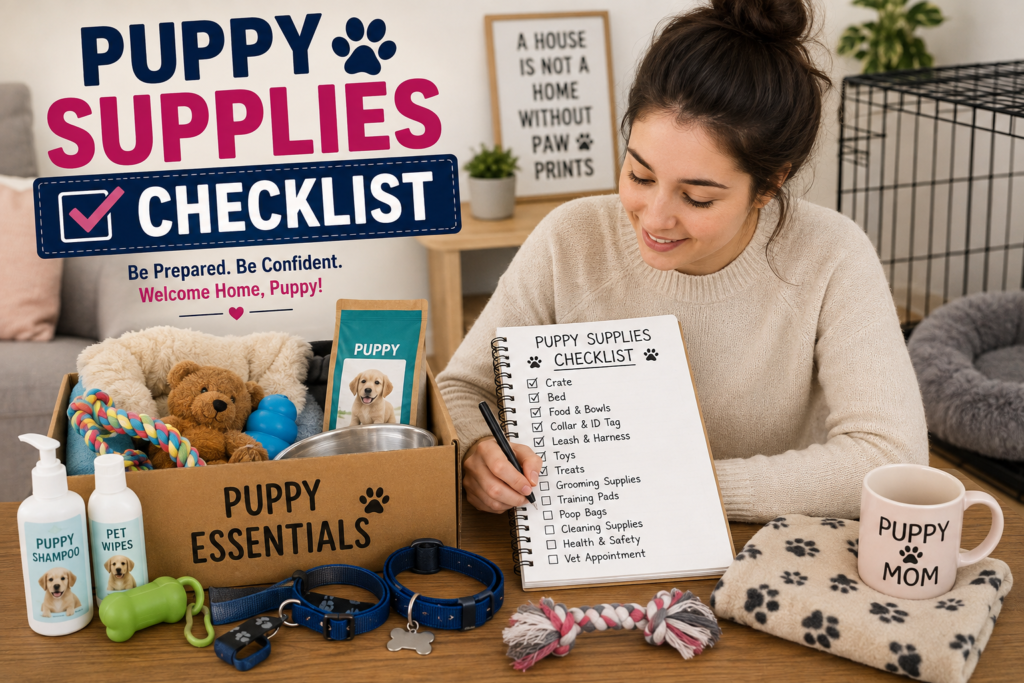
Read More Pet Care Tips/Articles from Al Falah Trader
If you found this guide helpful, you might also enjoy these Blogs/articles:
Best Toys for Teething Puppies: Safe Chews for Sore Gums
How Often Should You Feed a Puppy? Complete Feeding Guide
Puppy Feeding Schedule by Age: Complete Guide
Best Orthopedic Dog Beds for Comfort and Joint Support
Best Dog Toys: Safe, Fun, and Durable Picks for Every Dog
Best Durable Dog Toys for Aggressive Chewers
Best Dog Water Fountain: Buying Guide
How Much Sleep Do Dogs Need? A Complete Age-by-Age Guide
How to Keep Your Dog Healthy: A Complete Care Guide
Best Interactive Dog Toys for Large Dogs
Recommended Products
Memory Foam Dog Beds for Maximum Comfort & Support – Shop Now
Best Heated Dog Beds for Winter – Shop Now
Plush Calming Dog Bed – Soft Pet Nest Bed for Dogs & Cats – Shop Now
Princess Dog Bed – Cozy Fantasy Pet Nest Bed for Dogs & Cats – Shop Now
Dog Potty Training in 7 Days – E-books
Durable Cactus Dog Chew Toy – Interactive Toy for Aggressive Chewers & Puppies – Shop Now
Durable Dog Toys For Aggressive Chewers Tough Interactive Dog Toys For Large Dogs Birthday Dog Chew Toy Teething Toys Treat Dispensing Dog Toy – Shop Now
Stainless Steel Cat Water Fountain 7L – Automatic Pet Water Dispenser with Ultra-Quiet Pump – Shop Now
Authoritative External Resources
For readers who want to learn more about canine health and behavior, consider linking to: