
Yes, puppies can drink excessive amounts of water, but normal daytime water should not be restricted simply to prevent accidents. Provide appropriate hydration, take your puppy outside after drinking, and contact a veterinarian if thirst or urination suddenly increases.
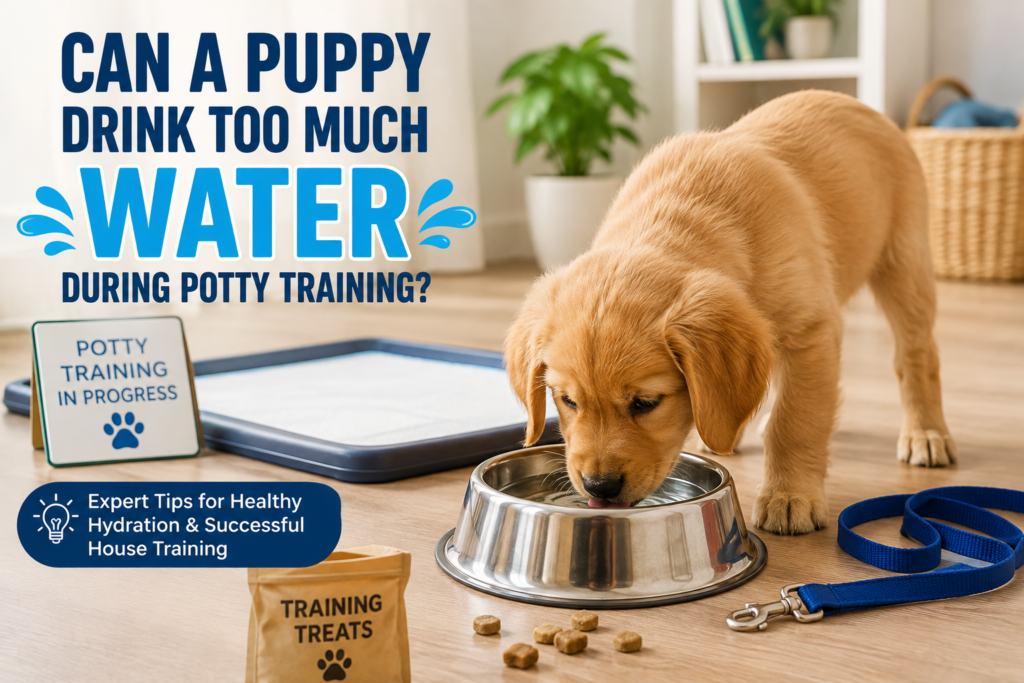
Bringing home a puppy means learning a lot of new routines at once. One of the most common questions new puppy parents have is, can a puppy drink too much water during potty training?
The short answer is yes, excessive water intake is possible, but you should not solve potty-training accidents by simply restricting your puppy’s water. Puppies need water for normal growth, digestion, circulation, temperature regulation, and other essential body functions. They also tend to need frequent bathroom breaks because their bladders are still developing.
If your puppy drinks a lot of water and pees inside, that does not automatically mean they are drinking too much. Drinking after exercise, eating dry food, playing, or spending time in warm weather can naturally increase thirst.
The key is to understand what is normal for your puppy, create a predictable potty routine, and recognize when increased thirst or urination deserves veterinary attention.
Why This Topic Matters During Potty Training
Water and potty training are closely connected.
When a puppy drinks, the body processes that fluid and eventually produces urine. Because puppies have small bladders and limited bladder control, they may need to go outside relatively soon after drinking.
That means a puppy that drinks a large amount at once may have a harder time waiting until the next scheduled potty break.
However, this does not mean water is the enemy of house training.
In fact, trying to keep a puppy thirsty can create a different problem: inadequate hydration. Puppies can be more vulnerable to dehydration than adult dogs, so normal daytime water access should not be sacrificed simply to reduce accidents.
Successful potty training is usually more about timing, supervision, consistency, and frequent outdoor trips than about restricting water.
How Much Water Should a Puppy Drink?
There is no single amount that is perfect for every puppy. Water needs can vary with body size, age, diet, activity, weather, and health.
The American Kennel Club notes that weaned puppies generally need roughly 0.5 to 1 ounce of water per pound of body weight per day, although individual needs can vary. Younger puppies have different needs, and active puppies or puppies in hot conditions may require more.
For example, a 20-pound weaned puppy might commonly consume around 10–20 ounces of water over a day, but this should not be treated as a rigid prescription.
Puppy water intake chart by weight
| Puppy Weight | Approximate Daily Water Range* |
| 5 lb | 2.5–5 oz |
| 10 lb | 5–10 oz |
| 15 lb | 7.5–15 oz |
| 20 lb | 10–20 oz |
| 30 lb | 15–30 oz |
| 40 lb | 20–40 oz |
*These figures are a general reference based on the commonly cited 0.5–1 ounce per pound guideline for weaned puppies. Your puppy may need more or less depending on age, food, activity, weather, and health. Ask your veterinarian for individualized guidance.
Rather than obsessing over a precise number, pay attention to your puppy’s normal drinking pattern.
If your puppy suddenly goes from drinking normally to constantly drinking water, that change is more important than comparing the puppy with another dog.
Can a Puppy Drink Too Much Water During Potty Training?
Yes, a puppy can drink an excessive amount of water. In unusual circumstances, consuming too much water can contribute to a dangerous condition called water intoxication or overhydration. Signs can include lethargy, nausea, vomiting, loss of coordination, bloating, excessive salivation, dilated pupils, or pale gums.
However, ordinary puppy drinking is usually not a cause for alarm.
A puppy may temporarily drink more after:
- Running or playing
- Exercising
- Spending time outdoors in warm weather
- Eating dry food
- Waking from a nap
- Eating a salty treat or meal
- Losing fluids through vomiting or diarrhea
- Becoming thirsty after being active
The bigger concern is a persistent and unexplained increase in thirst, especially when it happens together with increased urination or other changes in behavior.
Should I Limit Puppy Water Intake During Potty Training?
Generally, you should not restrict your puppy’s normal daytime water intake simply to prevent potty accidents.
A better approach is to manage the schedule around drinking.
For example, if your puppy drinks a bowl of water, don’t expect them to remain indoors for hours without a bathroom opportunity. Instead, take the puppy outside as part of the potty routine.
This approach teaches the puppy an important connection:
Drink → go outside → potty → praise.
The American Kennel Club specifically recommends taking young puppies outside after drinking, along with trips after waking, eating, playing, and spending time in a crate.
If your puppy seems genuinely thirsty, do not deliberately withhold water to force longer bladder control.
And if your puppy appears to be drinking excessively, discuss the pattern with your veterinarian rather than attempting a strict water-restriction program yourself. Veterinary guidance is particularly important when increased thirst is accompanied by increased urination.
How Much Water Should a Puppy Drink During House Training?
During the day, your goal should be consistent hydration plus predictable potty opportunities.
A practical puppy water schedule for potty training might look like this:
- Offer fresh water in the morning.
- Take your puppy outside shortly after drinking.
- Continue normal daytime water access.
- Take the puppy outside after meals.
- Take the puppy outside after naps.
- Take the puppy outside after active play.
- Take the puppy outside after significant drinking.
- Give one final potty opportunity before bedtime.
This is much more useful than trying to calculate exactly how many milliliters your puppy can tolerate before needing to pee.
How long after drinking water do puppies pee?
There is no universal timer.
Some puppies may need to urinate soon after drinking, while others take longer. Age, bladder development, activity, previous potty breaks, and the amount consumed can all affect timing.
For training purposes, assume that drinking increases the chance that your puppy will need to go soon, and use that opportunity to take them outside.
Puppy Drinks a Lot of Water and Pees Inside: What Should You Do?
If your puppy drinks a lot of water and pees inside, don’t immediately assume the water is causing the training failure.
First, look at the entire routine.
Ask yourself:
- Did the puppy just wake up?
- Did they recently eat?
- Did they drink a large amount?
- Were they playing?
- Has it been a long time since their last potty break?
- Were they supervised?
- Is the puppy old enough to hold it for the expected period?
- Are accidents becoming less frequent over time?
Young puppies simply cannot hold their urine for as long as mature dogs. Potty training can take weeks or months, and individual puppies progress at different rates.
What if my puppy pees every 30 minutes?
A puppy that pees every 30 minutes may simply be very young, active, recently hydrated, or still developing bladder control.
But frequent urination should not automatically be dismissed as normal puppy behavior.
If the frequency is persistent, suddenly worse, accompanied by straining, blood in the urine, discomfort, excessive thirst, lethargy, or other unusual symptoms, contact your veterinarian.
A urinary tract infection and other medical problems can contribute to inappropriate urination.
When to Take Away Puppy Water Bowl at Night
Nighttime is where many puppy parents become confused.
Some potty-training guidance recommends removing food and water bowls a couple of hours before bedtime for a healthy puppy that is otherwise receiving adequate water during the day. The purpose is to create a predictable final potty opportunity before sleep, not to deprive the puppy of hydration.
For example, if bedtime is around 11 p.m., a household might establish a consistent evening routine and offer a final potty trip shortly before bed.
However, there is no universal rule that every puppy should have water removed at exactly the same time.
Age, health, weather, activity, diet, medication, and individual needs matter.
If your puppy is unusually thirsty, sick, vomiting, has diarrhea, or has been instructed by a veterinarian to maintain access to water, do not follow a generic nighttime restriction schedule without professional advice.
Should I take away my puppy’s water at night?
For a healthy puppy that is properly hydrated during the day, a veterinarian-approved nighttime routine may include removing the water bowl before bedtime.
But this should not become an excuse to limit water throughout the day.
The goal is a consistent routine, not dehydration.
Should Puppies Have Water Available All Day?
For normal daytime care, puppies need reliable access to fresh water.
Water should be clean and replaced regularly. The bowl itself should also be washed routinely because bacteria, food particles, saliva, and debris can accumulate.
A puppy that spends the day without adequate access to water may become excessively thirsty later and drink a large amount quickly.
That can make potty scheduling more difficult and may also compromise hydration.
Therefore, think in terms of healthy access and predictable potty breaks, rather than simply limiting the bowl.
Why Is My Puppy Drinking So Much Water?
There are many possible explanations for increased thirst.
Normal reasons
Your puppy may drink more because of:
- Hot weather
- Increased exercise
- Exciting play
- Dry food
- Increased activity
- Temporary fluid loss
These situations may produce a reasonable increase in drinking.
When increased thirst may be concerning
A puppy suddenly drinking a lot of water without an obvious explanation deserves closer attention.
Persistent excessive thirst and urination can occur with a variety of medical conditions, including kidney problems, diabetes, urinary problems, electrolyte abnormalities, and other disorders.
This is why tracking your puppy’s normal drinking pattern can be useful.
If you notice a significant change, write down approximately how much your puppy drinks, how frequently they urinate, what they eat, and whether there are other symptoms.
That information can help your veterinarian evaluate the situation.
Can a Puppy Get Sick From Drinking Too Much Water?
Yes, although serious water intoxication is not the same thing as a puppy simply drinking a little more than usual.
Overhydration can cause dangerous changes in the body’s electrolyte balance. Possible warning signs include:
- Extreme tiredness
- Vomiting
- Excessive drooling
- Staggering or poor coordination
- Bloating
- Dilated pupils
- Pale gums
- Unusual behavior
If you believe your puppy consumed an unusually large amount of water and develops concerning symptoms, seek veterinary care promptly.
Water intoxication can also occur when dogs ingest large amounts of water during activities such as swimming or playing in water.
Benefits of a Proper Puppy Water and Potty Routine
A thoughtful routine can make house training easier without compromising hydration.
1. Fewer preventable accidents
Taking your puppy outside after drinking reduces the chance that they will be caught without an appropriate potty opportunity.
2. Better routine recognition
Puppies learn through repetition. Consistent timing helps them understand what happens after drinking, eating, sleeping, and playing.
3. Easier monitoring
A predictable routine makes it easier to notice unusual changes in drinking or urination.
4. Healthier hydration habits
The objective is not to make a puppy drink less. It is to help them maintain normal hydration while learning appropriate bathroom habits.
Drawbacks and Things to Consider
There are also some common misconceptions worth avoiding.
Restricting water too aggressively
The biggest problem is treating water restriction as the primary potty-training technique.
This can create unnecessary dehydration risk. Never use prolonged or aggressive water restriction as a substitute for proper potty training or veterinary evaluation.
Expecting an adult bladder from a young puppy
Puppies have limited bladder control and need frequent opportunities to go outside. Expecting them to wait too long can create accidents even when training is going well.
Ignoring sudden changes
If your puppy suddenly becomes extremely thirsty and urinates much more than usual, don’t automatically blame potty training.
A medical evaluation may be appropriate.
Puppy Water Setup Buying Guide
You don’t need expensive equipment to provide good hydration. However, choosing the right water setup can make daily puppy care easier.
Who should consider a dedicated puppy water setup?
A suitable water bowl or fountain can be particularly useful for:
- New puppy owners
- Busy households
- Puppies that knock over lightweight bowls
- Puppies that make a mess around their water station
- Owners who want easier daily cleaning
- Homes with multiple pets
What features should you consider?
Stable base: Puppies can be surprisingly enthusiastic around water. A heavier or non-slip bowl can reduce tipping.
Appropriate size: Choose a bowl that allows comfortable drinking without forcing the puppy to stretch awkwardly.
Easy cleaning: Smooth, washable surfaces are preferable because water bowls need regular cleaning.
Durable materials: Stainless steel is a popular option because it is durable and easy to clean. Food-safe, pet-appropriate materials are important regardless of the style you choose.
Water visibility: A transparent or easy-to-monitor setup can make it simpler to notice how much water remains.
Spill control: A wide, stable base or dedicated mat can help protect flooring.
Water fountain vs. traditional bowl
| Feature | Traditional Water Bowl | Pet Water Fountain | Best Choice |
| Simplicity | Very simple | More components | Bowl |
| Cleaning | Usually easier | Requires filter/pump cleaning | Bowl |
| Moving water | No | Yes | Fountain |
| Electricity | Not required | Usually required | Bowl |
| Spill management | Depends on design | Depends on design | Tie |
| Monitoring intake | Easy | Can be less obvious | Bowl |
| Convenience for some homes | High | High | Depends on puppy |
A fountain can be convenient, but it is not necessary for healthy hydration. The best setup is one that provides clean water and is easy for you to maintain consistently.
Expert Tips for Managing Puppy Water Intake During Potty Training
Here are practical ways to make the process easier:
- Keep fresh water available during the day.
- Take your puppy outside after drinking.
- Always offer a potty break after naps.
- Take your puppy outside after meals and energetic play.
- Use praise immediately after successful outdoor potty trips.
- Track unusual changes in drinking or urination.
- Clean water bowls regularly.
- Don’t punish indoor accidents.
- Limit your puppy’s access to too much of the house too soon.
- Ask your veterinarian about unusual thirst or urination.
Remember that potty training is a learning process. Accidents don’t necessarily mean your puppy is stubborn or that you have failed.
Common Puppy Water and Potty-Training Mistakes
Mistake #1: Removing water all day
This is not a good substitute for training.
Instead, maintain normal hydration and increase the frequency of potty breaks.
Mistake #2: Waiting for the puppy to ask
Very young puppies may not reliably signal that they need to go outside.
Take them out proactively.
Mistake #3: Ignoring drinking after play
A puppy may become thirsty after energetic activity. If they drink afterward, consider it another reason for a potty trip.
Mistake #4: Assuming every accident is behavioral
Repeated accidents can sometimes have a medical explanation.
Mistake #5: Using a rigid water chart as a diagnosis
Water-intake ranges are useful reference points, not a diagnosis. Your puppy’s veterinarian is the right person to assess abnormal thirst.
Mistake #6: Punishing accidents
Punishment does not teach the puppy where they should eliminate. Supervision, prevention, timing, and positive reinforcement are more useful approaches.
Frequently Asked Questions
1. Can a puppy drink too much water during potty training?
Yes. Puppies can consume excessive amounts of water, and severe overhydration can be dangerous. However, normal drinking should not be restricted simply because you are potty training. Persistent excessive thirst should be discussed with a veterinarian.
2. Should I limit my puppy’s water during potty training?
Don’t aggressively restrict water during the day. Instead, provide normal hydration and plan frequent potty trips, especially after drinking, eating, sleeping, and playing.
3. How much water does a puppy need per day?
A commonly used guideline for weaned puppies is about 0.5–1 ounce per pound of body weight per day, but individual needs vary. Age, food, exercise, temperature, and health can all affect water requirements.
4. Why is my puppy drinking so much water?
Warm weather, exercise, dry food, and temporary fluid loss can increase thirst. However, persistent or sudden excessive drinking—especially with increased urination—can sometimes indicate an underlying health issue.
5. How often should a puppy pee?
There is no single schedule that works for every puppy. Young puppies generally need frequent opportunities, particularly after waking, eating, drinking, playing, and being in a crate.
6. Why does my puppy pee right after drinking water?
Drinking adds fluid to the body, and young puppies have limited bladder capacity. Taking your puppy outside after drinking is therefore an important part of potty training.
7. Should I take away my puppy’s water at night?
For some healthy puppies, a consistent bedtime routine may include removing the water bowl a couple of hours before bedtime and providing a final potty trip. However, individual needs differ, and puppies should not have water restricted when medical circumstances require continued access.
8. Can a puppy get sick from drinking too much water?
Yes. Severe overhydration can cause water intoxication and may produce symptoms such as vomiting, lethargy, excessive drooling, poor coordination, bloating, and other neurological changes. Seek veterinary help if these symptoms occur after excessive water consumption.
9. What if my puppy is constantly drinking water and peeing?
A persistent pattern of excessive thirst and urination should not automatically be blamed on potty training. Several health conditions can cause these signs, so speak with your veterinarian about the change.
10. Does drinking more water make potty training harder?
It can create more potty opportunities, but it does not mean your puppy should drink less. The solution is usually to coordinate drinking with frequent outdoor breaks and consistent supervision.
Final Verdict: Should You Restrict Your Puppy’s Water?
So, can a puppy drink too much water during potty training? Yes, excessive water consumption is possible, but normal hydration should not be sacrificed simply to reduce accidents.
The better strategy is to create a predictable puppy water schedule for potty training: provide appropriate daytime access to fresh water, take your puppy outside after drinking, and build potty breaks around meals, naps, play, and bedtime.
If your puppy suddenly becomes extremely thirsty, drinks far more than usual, urinates excessively, or develops symptoms such as vomiting, lethargy, weakness, blood in the urine, or difficulty urinating, contact your veterinarian. Increased thirst and urination can have medical causes that require evaluation.
Most importantly, remember that accidents are a normal part of raising many young puppies. With patience, supervision, a consistent routine, and appropriate hydration, you can help your puppy develop good bathroom habits without turning water into the enemy.
Build a Better Puppy Setup With Al Falah Trader
A comfortable, organized puppy area can make everyday training easier. From practical puppy essentials to feeding and hydration accessories, Al Falah Trader can help you create a more convenient setup for your new companion.
Explore our pet essentials collection and choose products that make feeding, hydration, training, cleaning, and everyday puppy care simpler.
Read More Pet Care Tips/Articles from Al Falah Trader
If you found this guide helpful, you might also enjoy these Blogs/articles:
How Often Should You Feed a Puppy? Complete Feeding Guide
Puppy Essentials Checklist: 35 Must-Haves for New Owners
Puppy Feeding Schedule by Age: Complete Guide
Best Orthopedic Dog Beds for Comfort and Joint Support
Best Dog Toys: Safe, Fun, and Durable Picks for Every Dog
Best Durable Dog Toys for Aggressive Chewers
Best Dog Water Fountain: Buying Guide
How Much Sleep Do Dogs Need? A Complete Age-by-Age Guide
How to Keep Your Dog Healthy: A Complete Care Guide
Best Interactive Dog Toys for Large Dogs
Recommended Products
Memory Foam Dog Beds for Maximum Comfort & Support – Shop Now
Best Heated Dog Beds for Winter – Shop Now
Plush Calming Dog Bed – Soft Pet Nest Bed for Dogs & Cats – Shop Now
Princess Dog Bed – Cozy Fantasy Pet Nest Bed for Dogs & Cats – Shop Now
Dog Potty Training in 7 Days – E-books
Durable Cactus Dog Chew Toy – Interactive Toy for Aggressive Chewers & Puppies – Shop Now
Durable Dog Toys For Aggressive Chewers Tough Interactive Dog Toys For Large Dogs Birthday Dog Chew Toy Teething Toys Treat Dispensing Dog Toy – Shop Now
Stainless Steel Cat Water Fountain 7L – Automatic Pet Water Dispenser with Ultra-Quiet Pump – Shop Now
Authoritative External Resources
For readers who want to learn more about canine health and behavior, consider linking to: